Titan Square
Before the sculpture, there is the building itself, a thirteen-storey complex
comprising three units, designed for Cofinimmo and built by CIT Blaton.
Rue Belliard, now one of the main thoroughfares of the European Quarter, was
designed during the reign of Leopold II. The historical height of the buildings is
determined by their width. These proportions lose their meaning when it comes
to increasing the building’s height by adding storeys. Similarly, a structure with
little mass casts a detrimental shadow over a patch of greenery situated between
Rue Belliard and Rue de la Loi, including, among others, the garden of the Spanish
Embassy.
In response to these two observations, two architectural approaches were adopted.
The first removes the base of the building from the historic building line. The second
creates a vast atrium across the first five storeys, with the six upper levels once again
aligned with the pavements of Rue Belliard. Within these, users and visitors enjoy
an exceptional view of this part of the capital, stretching into the distance.
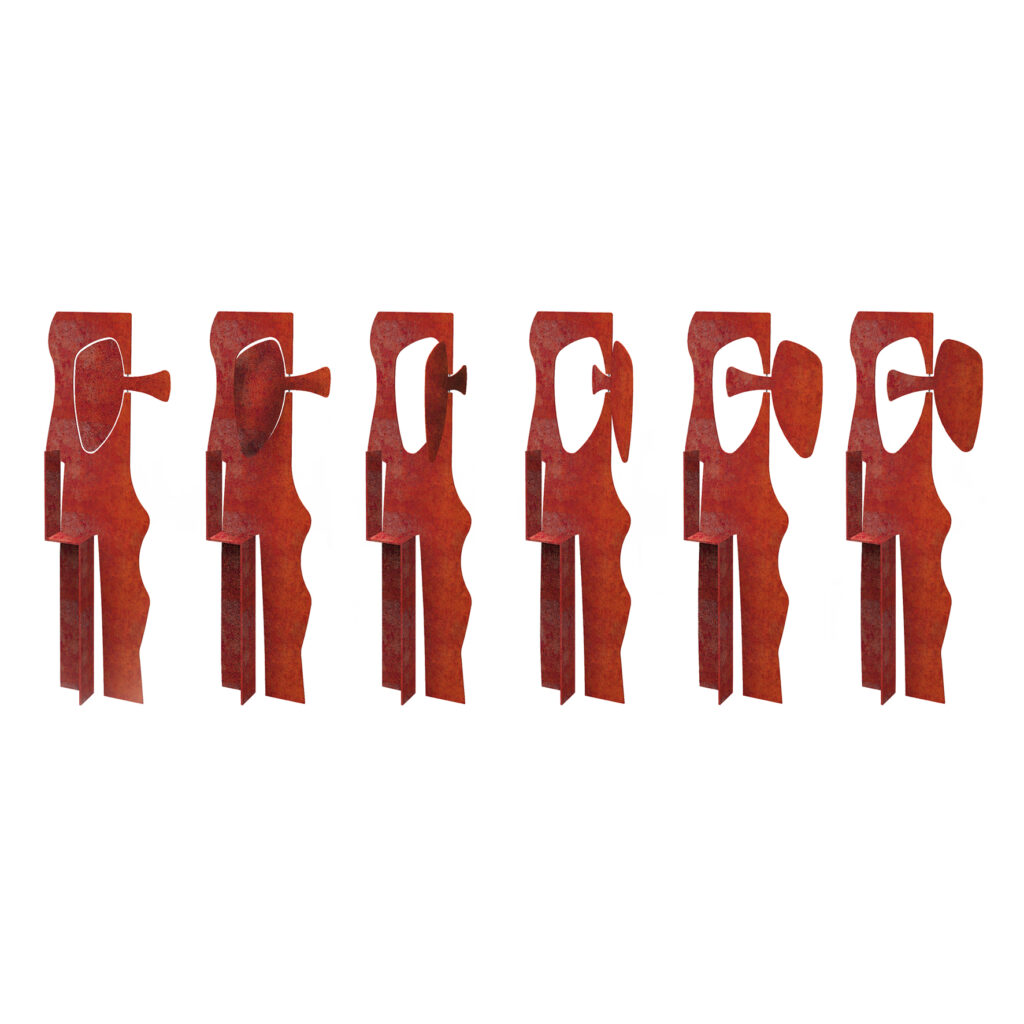
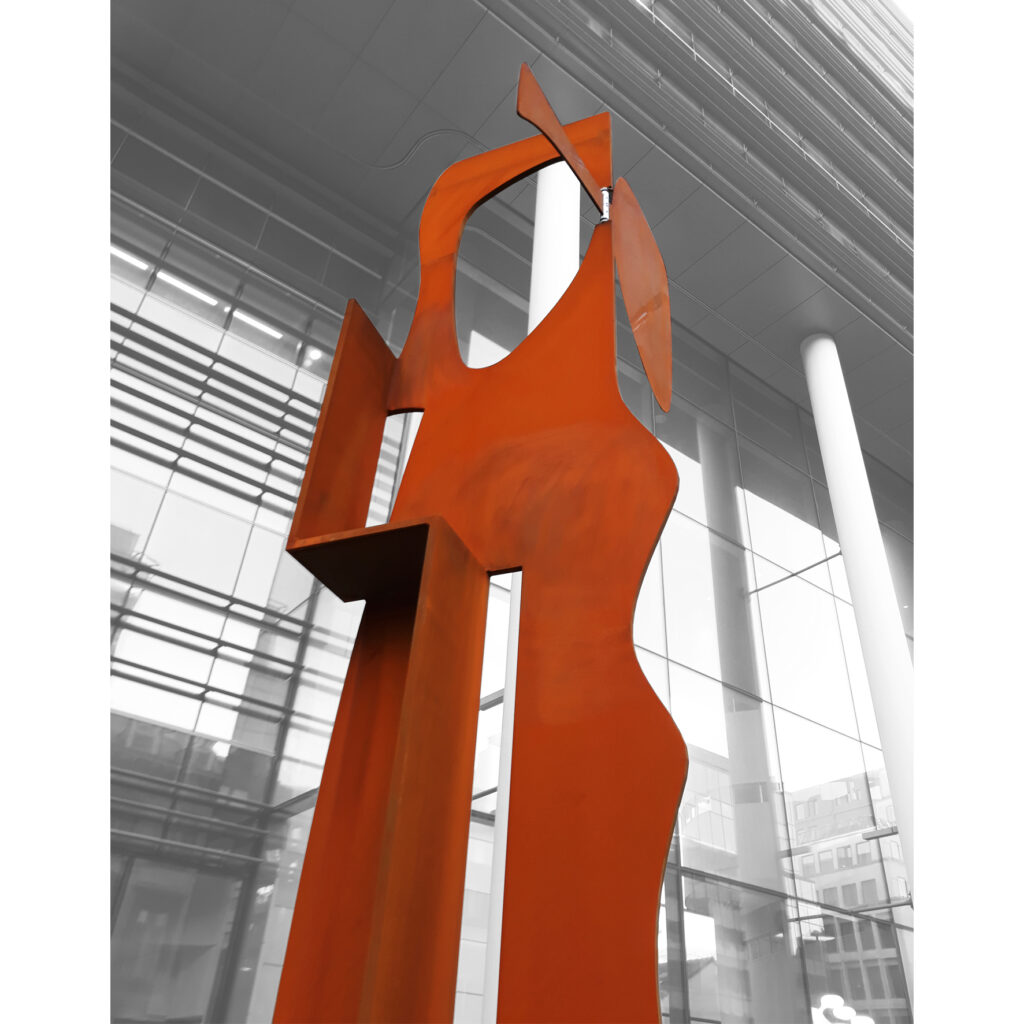
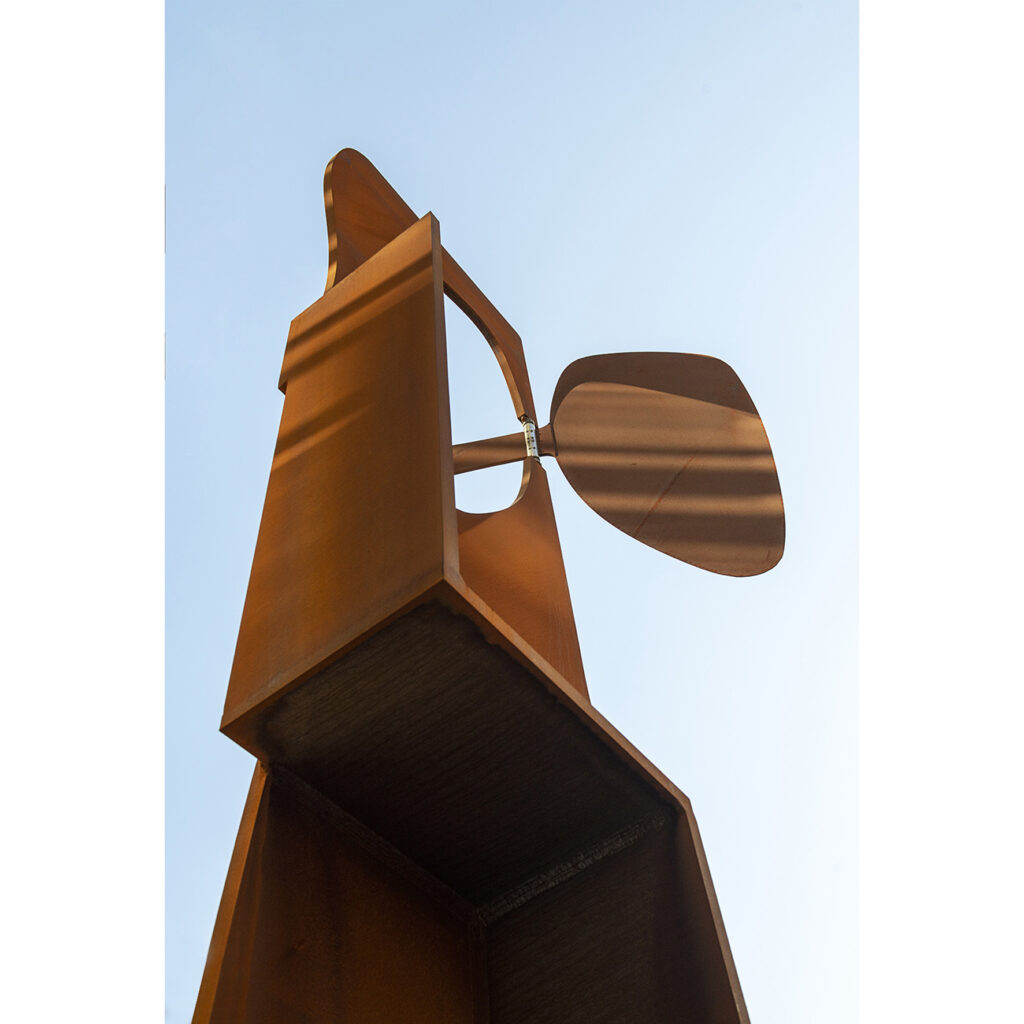
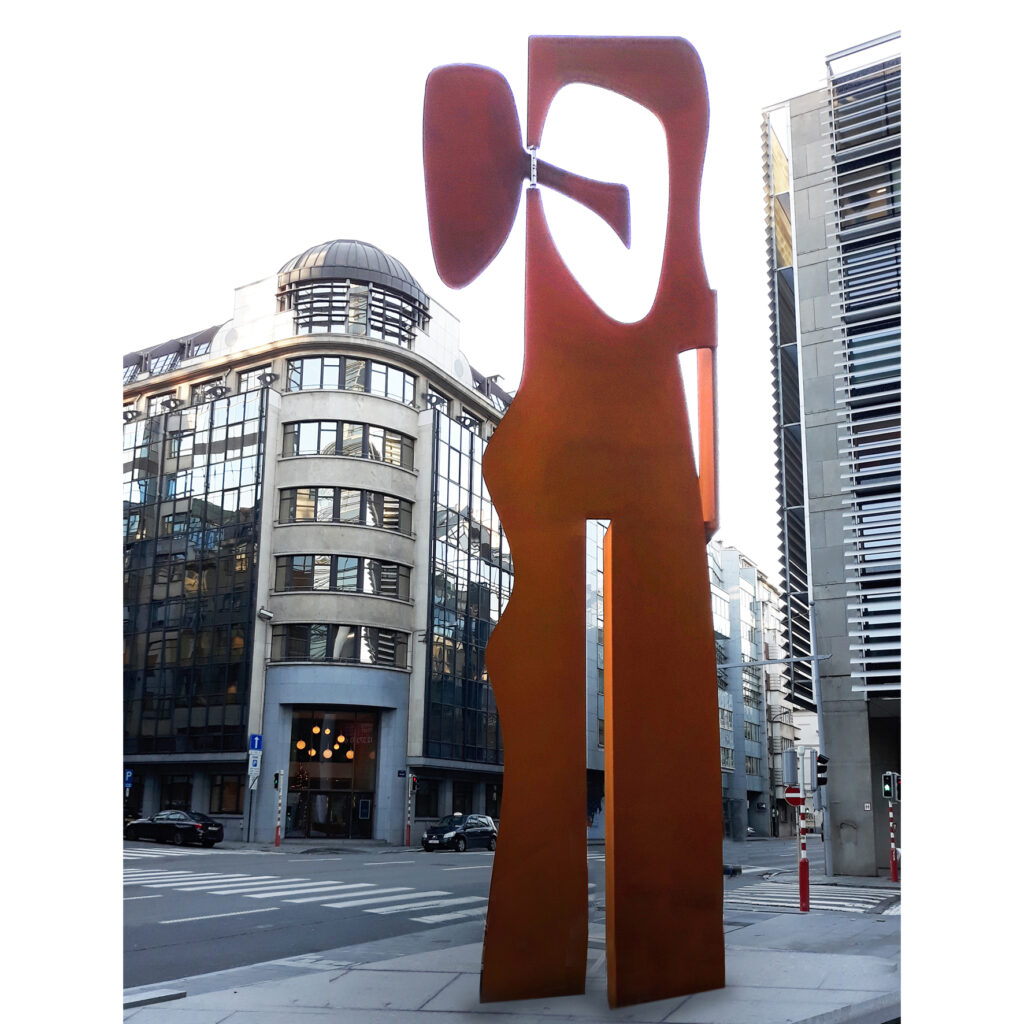
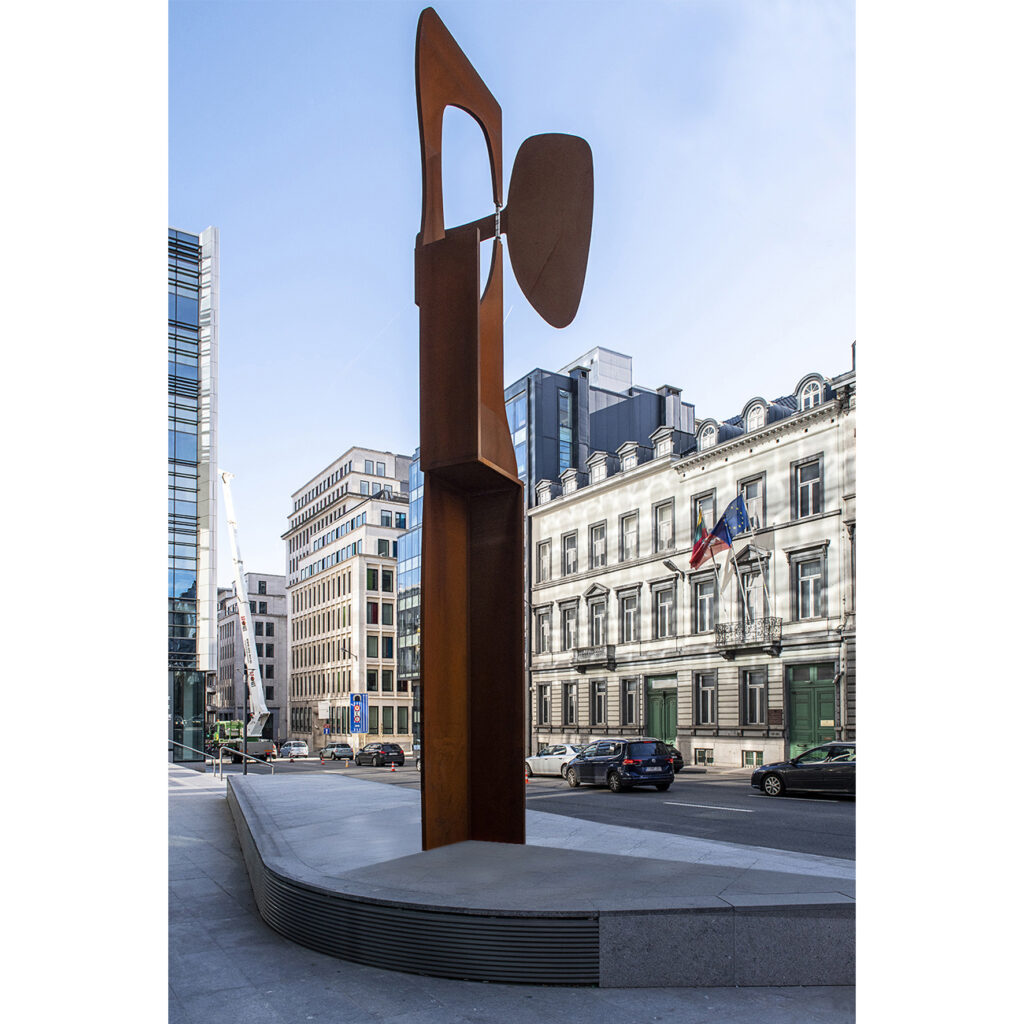
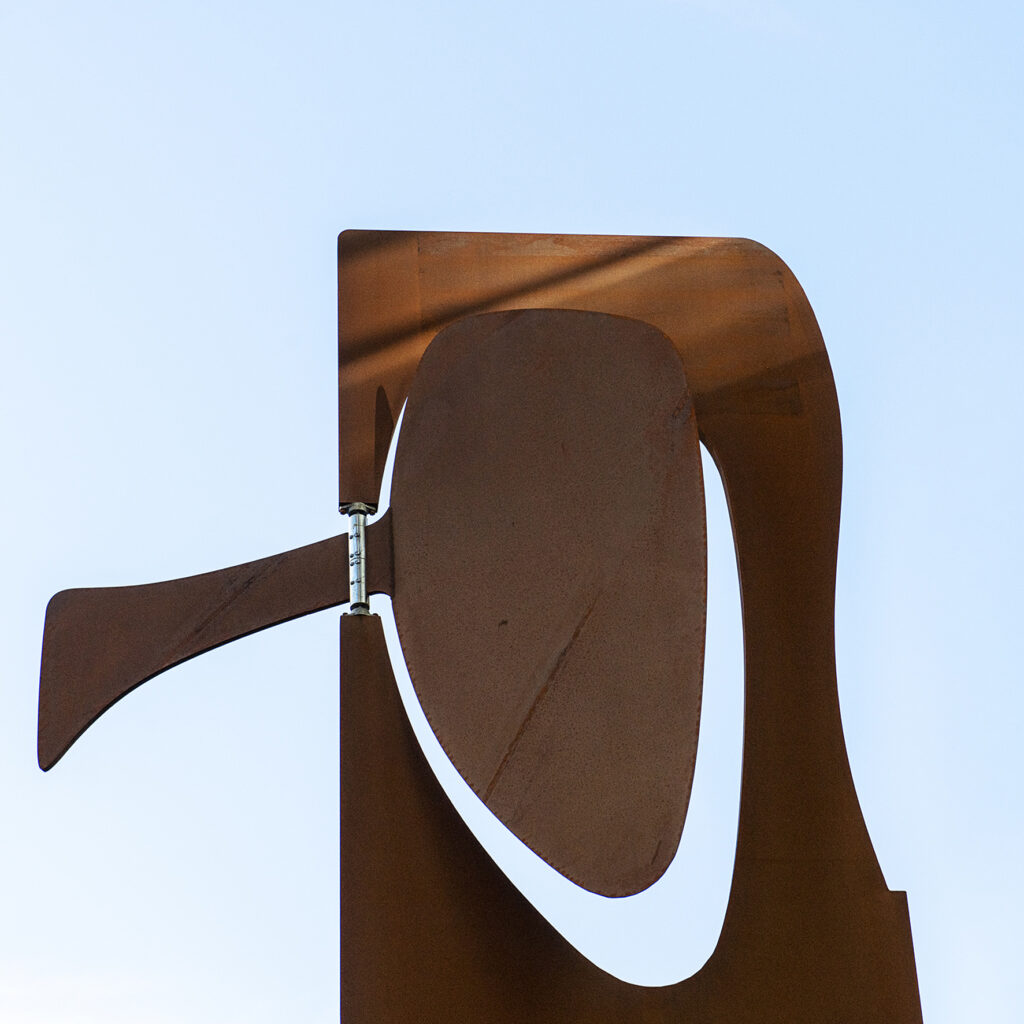
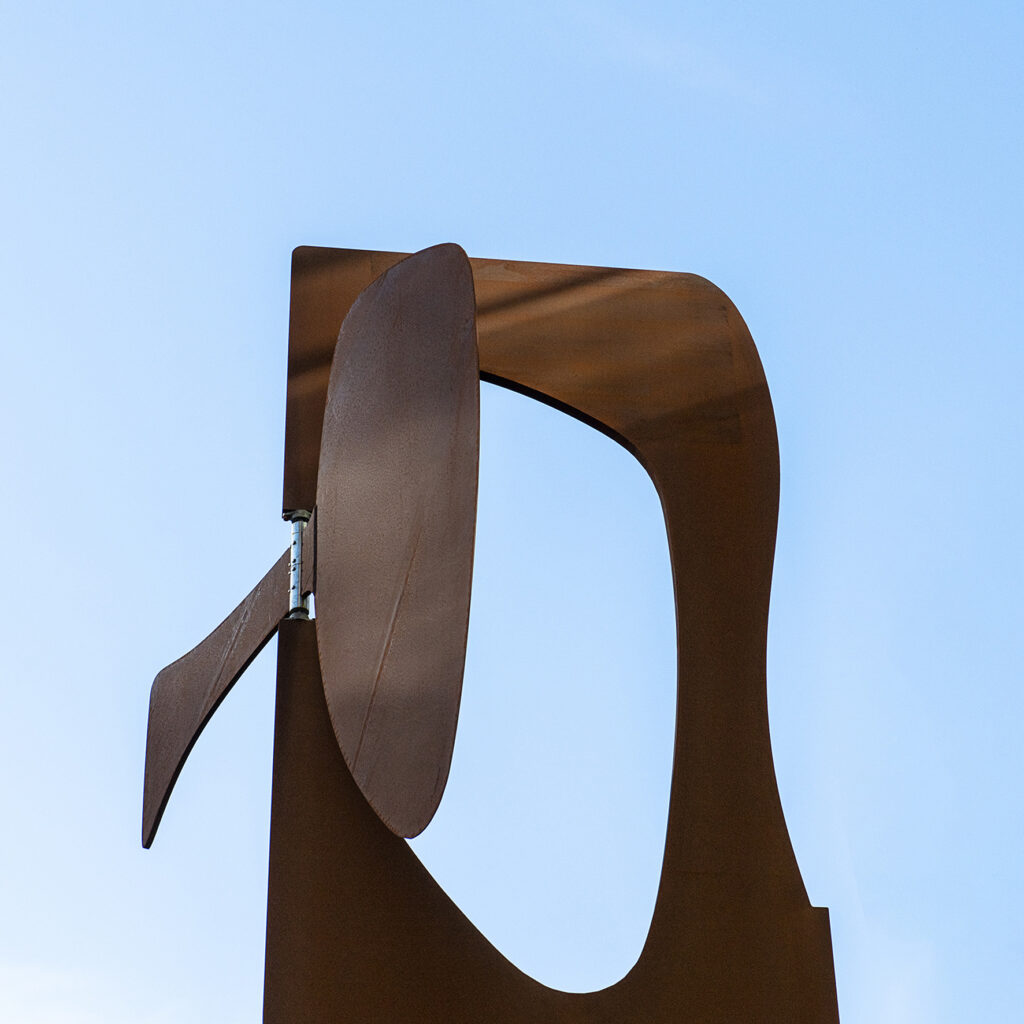
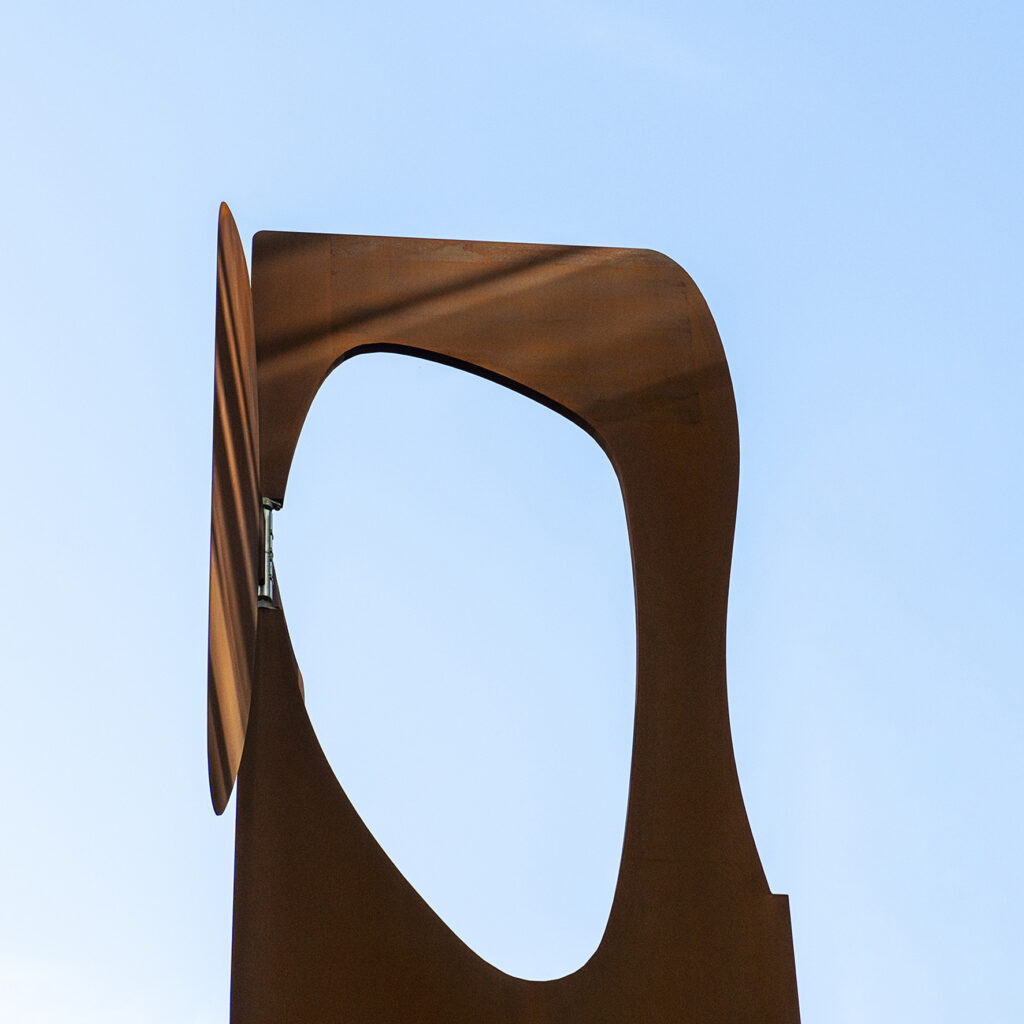
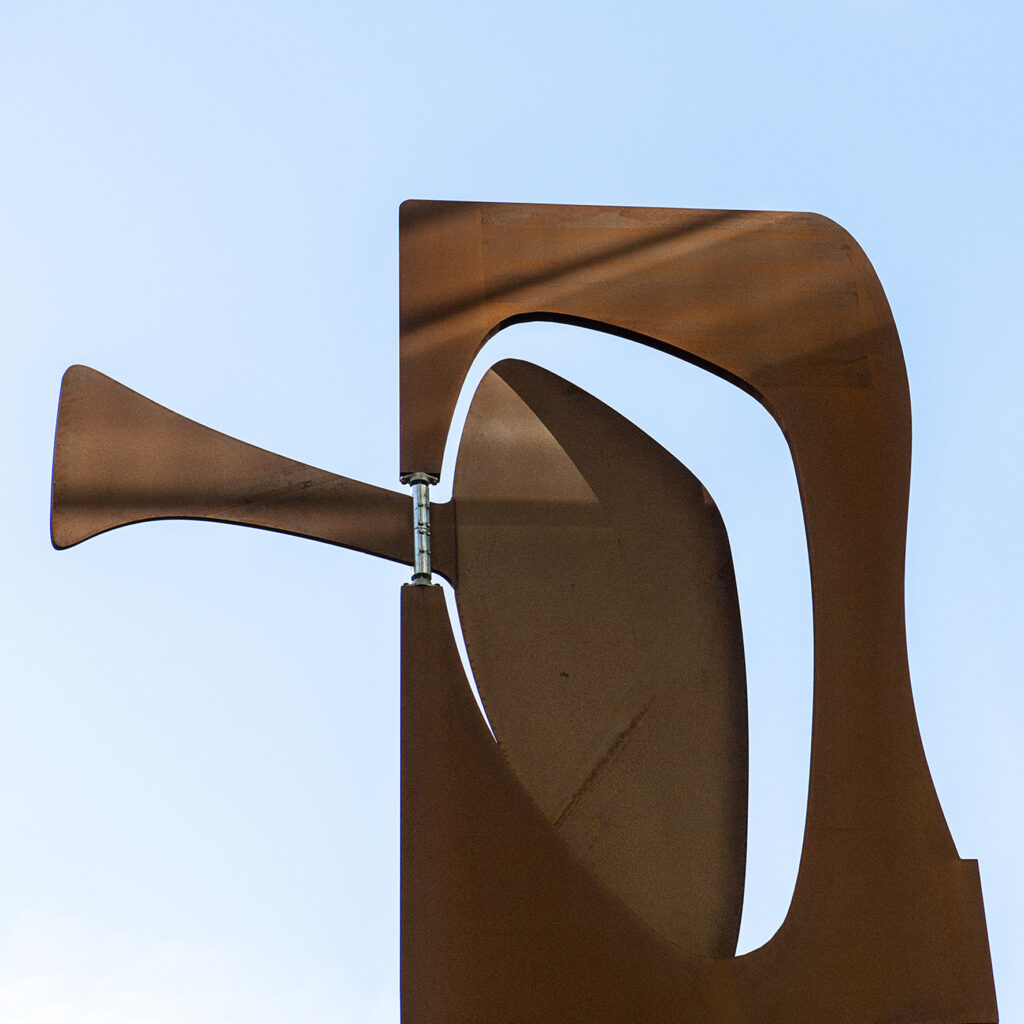
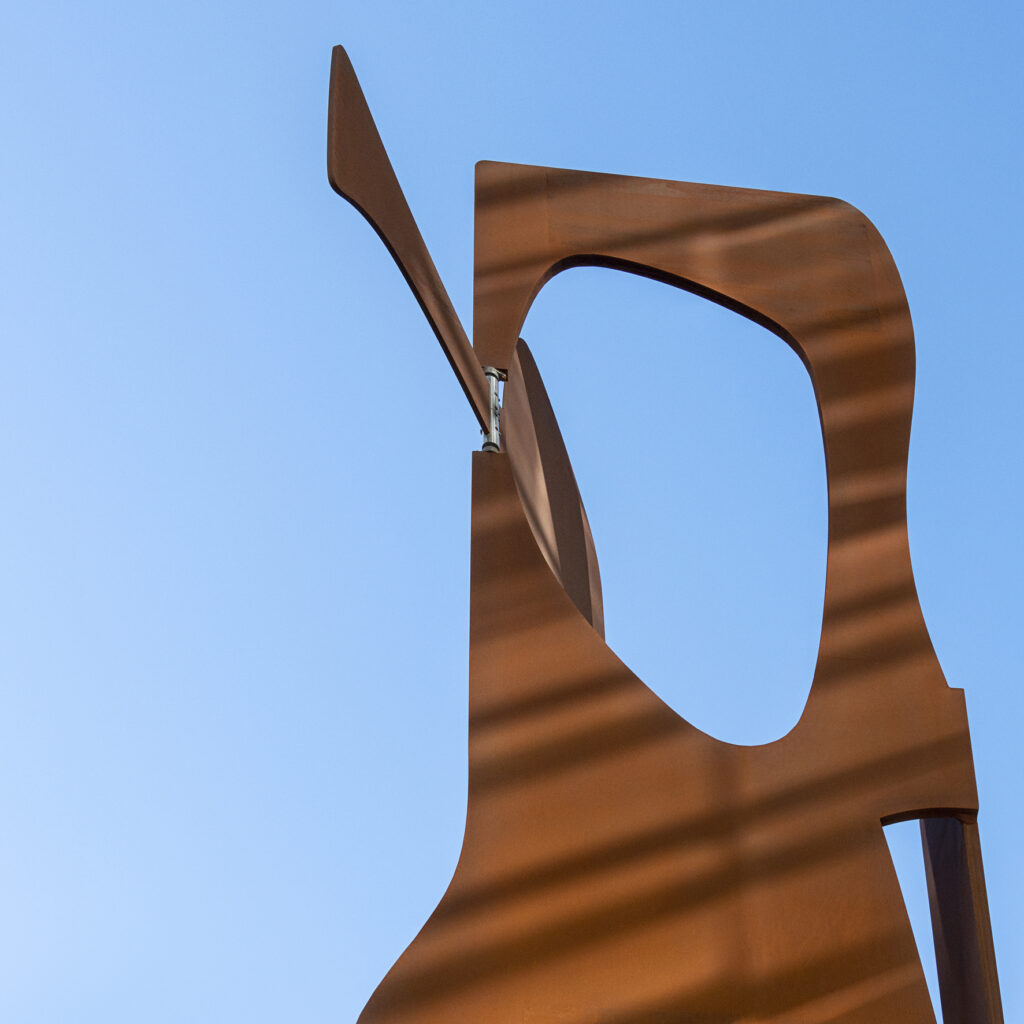
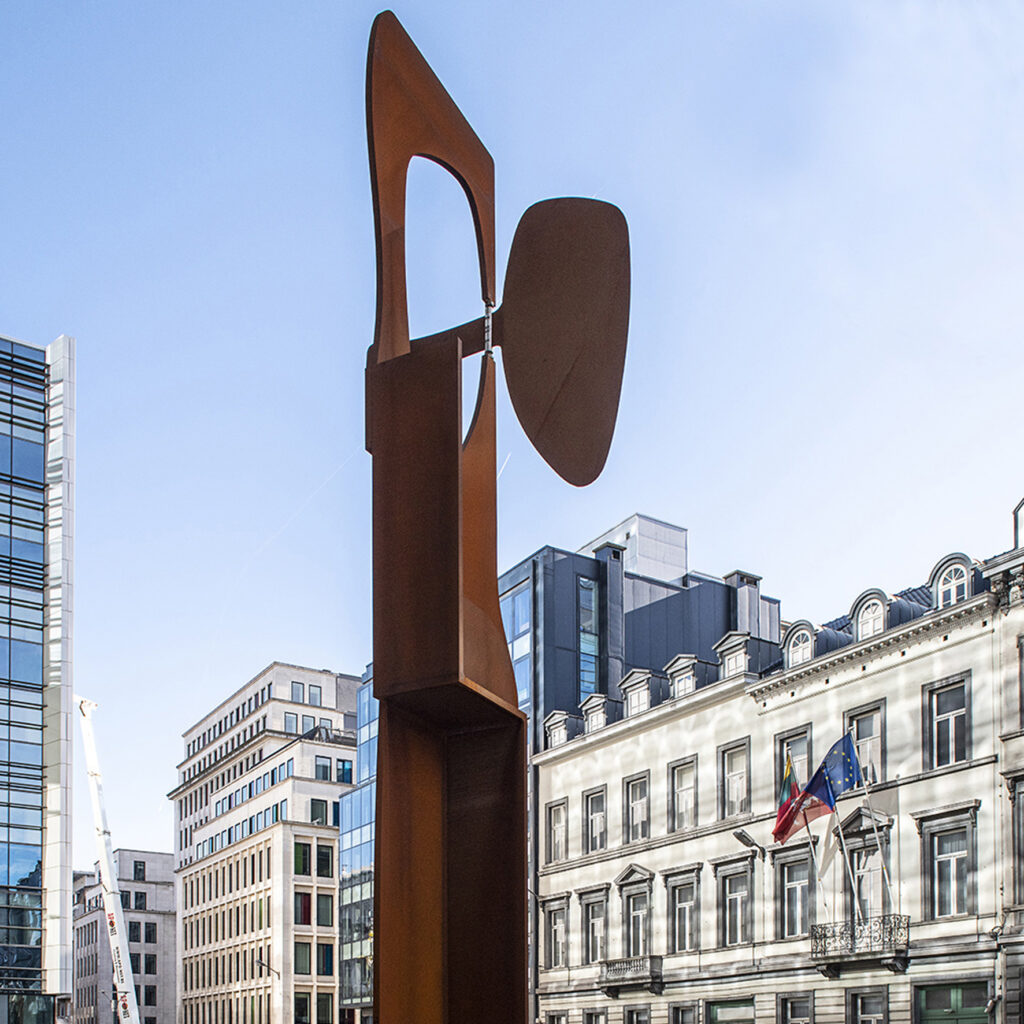
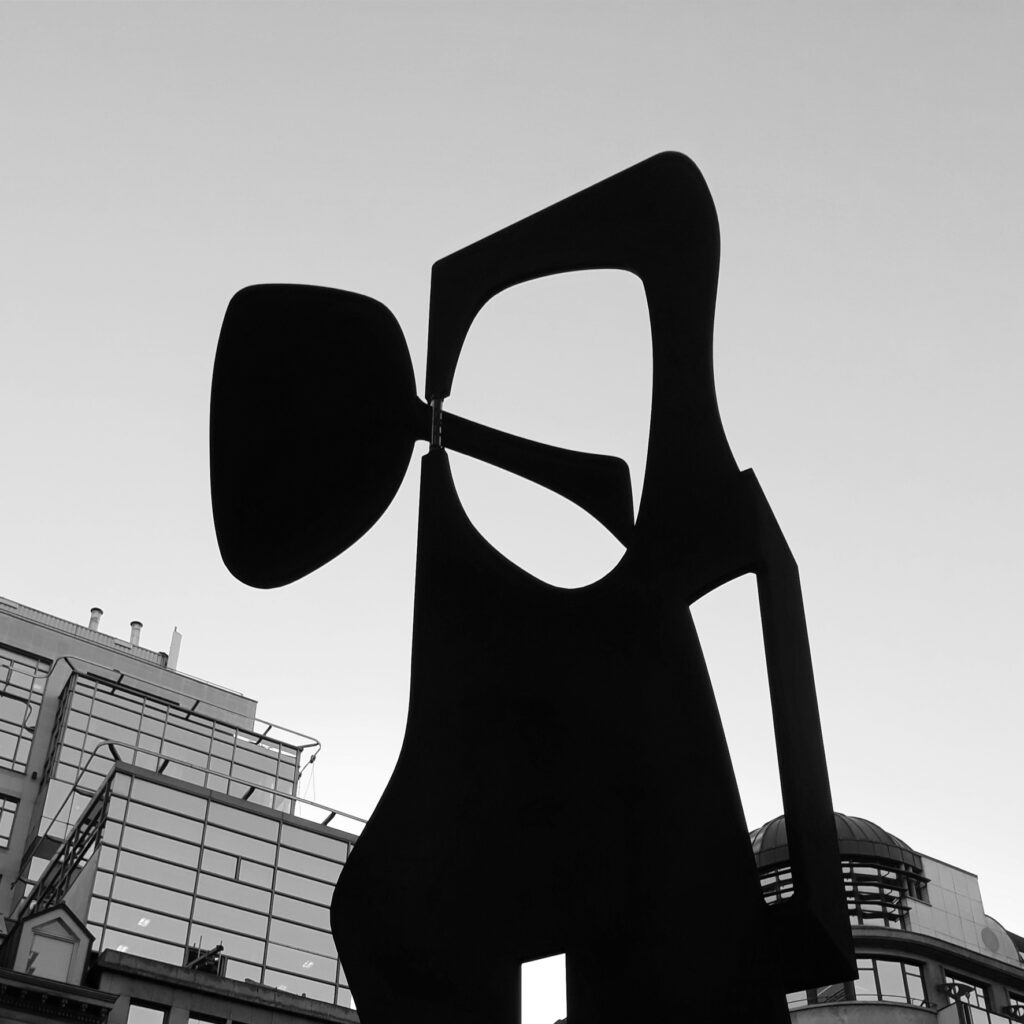
The recess is occupied by a figure, a Titan, a nine meters tall giant fashioned from
Corten steel; he is drawn from the legends of humanity. His steps came to a halt at
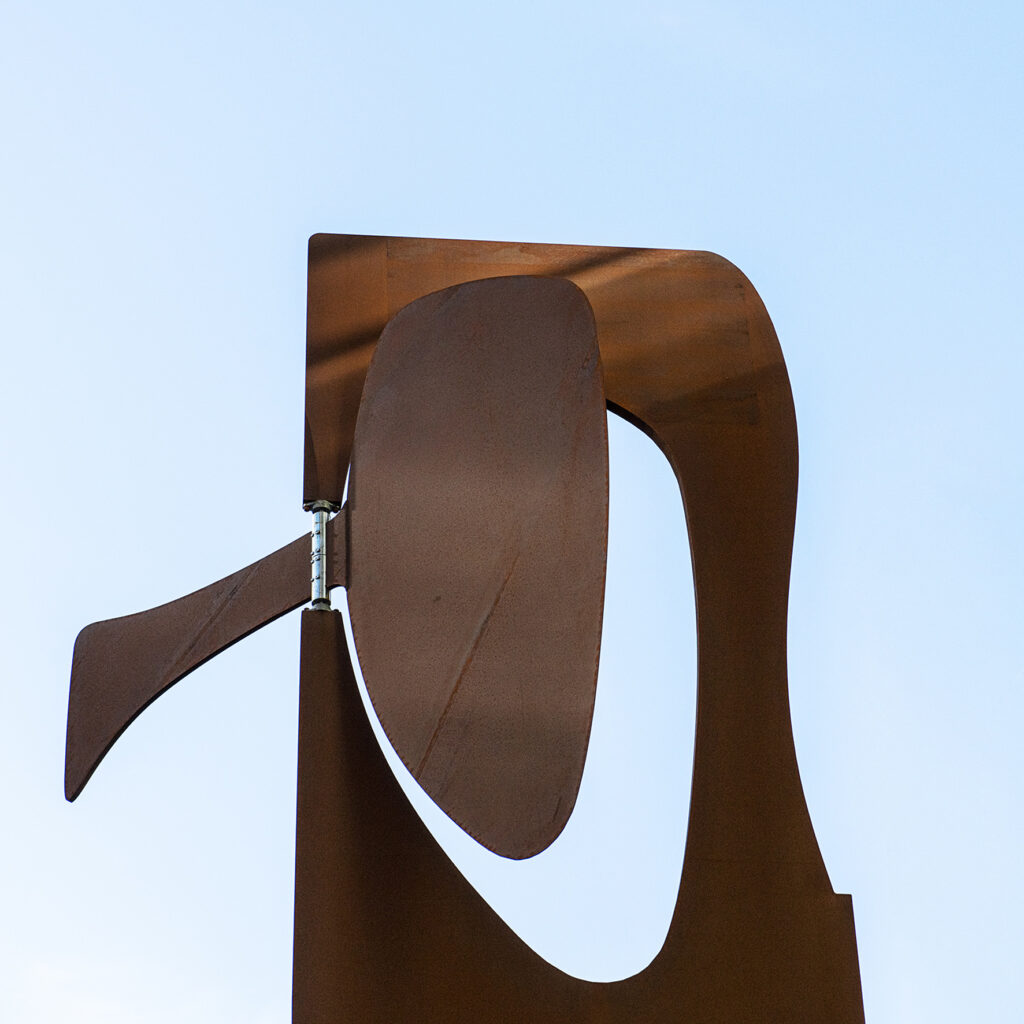
40 Rue Belliard. Only his head sways back and forth in the wind. But the memory
remains even as the face fades, for the void left by his effigy corresponds to that
which fills it.